
Key Points:
- Uncensored AI video generation: This page explores tools that let you create AI-generated videos with fewer content filters and more creative freedom.
- Image to Video Generation: It focuses on tech that turns a single still photo into a moving video, bringing images to life with motion and animation.
- No NSFW Restrictions: The tools listed don’t enforce strict content rules, so users can make videos without typical safety or censorship limits.
⚡️ BEST AI VIDEO GENERATORS ⚡️
Candy AI

Create NSFW AI Videos
Hyper-Realistic Models
Jump into Live Action
Mydreamcompanion

Generate Unfiltered AI Video
Censorship-Free AI Roleplay
Script Any Scenario
Seduced

High-Quality Uncensored Videos
Natural Model Movement
NSFW Chat & Image Geneartion
Ourdream

NSFW AI Video Generator
Generate Your Wildest Dream
60+ Actions to Choose From
The discourse around AI video generation has moved at a pace that’s almost felt slightly uncomfortable. Yesterday we were all still hyped about static image generators that struggled to correctly generate fingers, and today you’ve got people creating animated video content from static images that feel a little too close to home.
This is also why AI video generators from image have found their niche on the internet. You might disagree ethically, rejoice at the liberty or feel something in between (I do), but they are here because there is a demand for less restrictions and more autonomy.
Note that this naturally extends to adult and NSFW applications. I’d be really stupid to say otherwise. What’s most fascinating isn’t the tech, but the ways in which each of these services interpret the same core proposition: upload (or create) a picture, turn it into a video, and leave the limits to the viewer’s discretion.
Some are focused on realistic output, others on imaginative, some on value for money, some on the extreme. I’ve played around on these sites for hours and had moments of irritation, awe, bursts of laughter at clumsy results, and often thought “well… yeah, I suppose that is kind of cool”.
We’re not here to hype you or clutch our pearls. We’re here to tell you about real-world experiences with AI-powered video creators, how and why to use them, and the types of experiences you can realistically have with them.
The reason image-to-video AI gets me so excited is because it seems like the next big step
Converting an image to a video seems like a simple concept, but the execution is not as simple as it seems. An image is a statement of intent, a video requires flow, narrative and emotional tempo.
AI tools that generate video from still images have to “fill in the blanks” between the images, and that’s when things get interesting (or creepy). You can see the algorithm trying to parse body language, facial expression, lighting, and even suggested emotion.
Sometimes it works. Sometimes it feels like a dream dissolving. That’s part of the fun. In unrestricted spaces, the makers aren’t constrained to family-friendly results, so the model is challenged more.
“They learn faster, but they also reveal their mistakes more transparently. It’s a raw process. For artists, role-players, and adult content creators, it’s not about just being able to post NSFW content, but that they don’t have their creative energy slowed by overly protective algorithms.”
The catch is you have to be willing to take the helm. These instruments are not going to do the navigating for you. They require you to know what you are looking for… or what you are not looking for.
If you enjoy tinkering, destroying, and discovering new outcomes then you’ll love image-to-video AI. If you prefer flawless outcomes all of the time you’ll get frustrated. That’s a normal part of the process.
⬇️ Discover the Top AI Uncensored AI Video Generators from Image
Understanding “Uncensored”
First off, “uncensored” doesn’t equate to the wild west. It generally means less content restrictions on sexuality, nudity, body shapes, and scenarios. There are still technical restrictions—model detail, motion smoothness, render speed—but there aren’t ethical messages suggesting you reconsider your life decisions.
For some, this is liberating. It offers a medium where fantasy, art, and narrative can meet without constant interruption. However, uncensored platforms require more responsibility from the user.
If the content appears wrong, strange, or immoral, it’s up to you to tweak prompts and parameters. These services tend to operate on user discretion rather than stringent control, which can be liberating or burdensome, depending on your outlook.
From what I’ve seen, those who succeed in this space treat the AI as a partner rather than a dispenser. You tweak prompts, refine images, and regenerate videos, knowing that not everything will succeed on the first pass. It requires a form of emotional endurance.
You’re not simply pressing buttons; you’re dictating results. And oddly, the process can be somewhat fulfilling, particularly when a video renders as you envision.
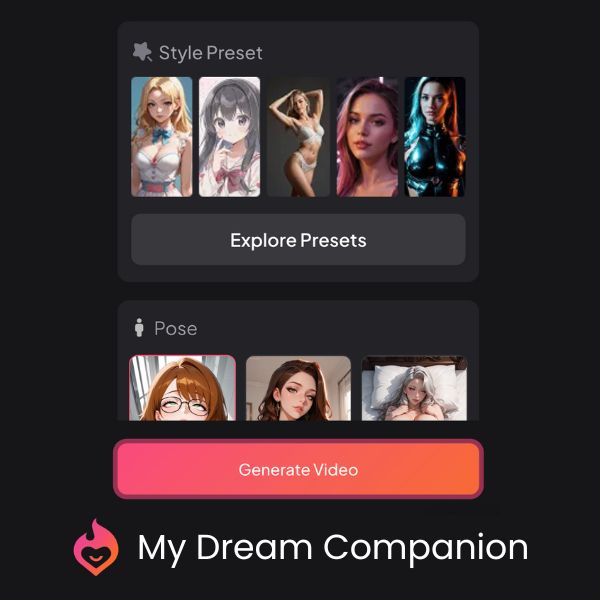
🏆 Top Uncensored Video Generator: My Dream Companion
The Users of AI Video Generators
If you assumed the user base was niche, you’d be wrong. Yes, sexual artists and enthusiasts make up a large contingent, but they’re far from the only users. Some want animated characters for visual stories without employing an animation studio.
Others are role players seeking bespoke scenarios instead of generic clips. Some are simply curious, probing the bounds of AI. I’ve even observed marketers exploring these platforms for provocative concept testing, though they’ll never publicly admit it.
The common thread among them is the pursuit of control. None of these users want predetermined models or “safe” settings. They want tools that adjust to them, not vice versa. While the learning curve can be intense, the reward is artistic freedom.
You’re not merely consuming media; you’re commanding it. That feeling of control is why these platforms continue to expand, despite the controversy and periodic public backlash.
Top Uncensored AI Video Generators from Image with No NSFW Restrictions
1. Candy AI – Best for Polished, User-Friendly Experiences
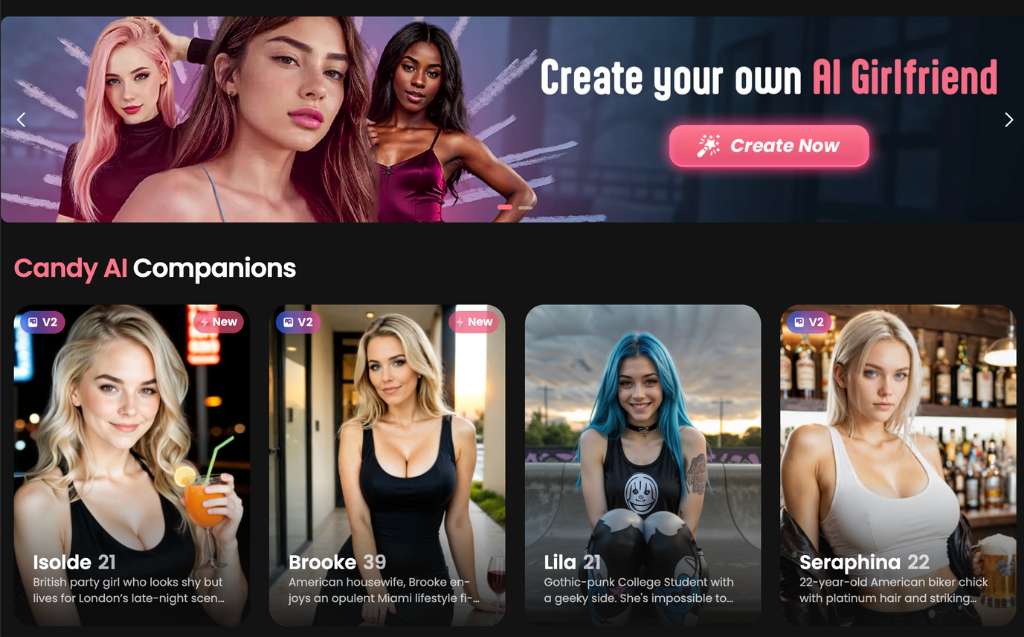
Candy AI stands out as the AI video generator for people who want power without feeling like they’re wrestling the interface. It’s surprisingly smooth, almost disarmingly so. The platform leans into personalization, allowing users to generate characters, animate them from images, and maintain visual consistency across video outputs.
What I appreciate most is how it balances freedom with usability. You don’t need to be a prompt engineer to get decent results with Candy AI video generator, but there’s still enough depth for advanced users to tweak things.
Visit Candy AICore features:
- Image-to-video animation with consistent character appearance
- Custom character creation and refinement
- Intuitive prompt controls with visual previews
- Fast rendering compared to many competitors
Use cases:
- Beginners exploring uncensored AI video generation
- Creators who value polish and ease of use
- Users who want predictable, repeatable results
My opinion? Candy AI feels like the “gateway” tool. It’s not the wildest or cheapest, but it’s reliable. If you’re new and don’t want to feel lost, this is a comfortable place to start.
2. Ourdream – Best for Experimental and Creative Storytellers

Ourdream is the AI video generator for people who enjoy pushing boundaries and don’t mind a bit of chaos along the way. It leans heavily into fantasy and surreal aesthetics, and you can feel that in the outputs.
Animations sometimes come out rough around the edges, but they’re rarely boring. The platform encourages narrative experimentation, letting users build scenes that feel more like fragments of a story than isolated clips.
Visit OurdreamCore features:
- Image-driven video generation with stylized motion
- Flexible prompt interpretation
- Emphasis on mood, atmosphere, and fantasy visuals
- Community-driven inspiration and examples
Use cases:
- Creative writers and role-players
- Users who enjoy surreal or dreamlike visuals
- Experimenters who value originality over polish
Personally, I like Ourdream when I’m in a “let’s see what happens” mood. It’s less predictable, but that unpredictability can spark ideas you didn’t know you had.
3. Mydreamcompanion – Best for Emotional Connection and Continuity
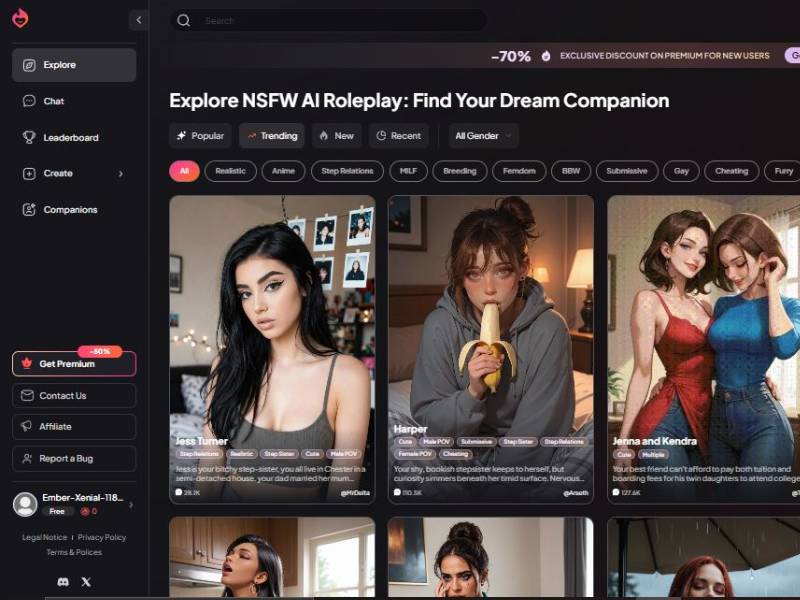
Mydreamcompanion focuses on emotional resonance more than raw technical flash. As an AI video generator, it shines when used for ongoing character narratives.
The platform emphasizes continuity, making it easier to create videos that feel like part of a longer relationship or story arc.
Visit MydreamcompanionCore features:
- Consistent character animation from images
- Emotion-driven prompt interpretation
- Slower, more deliberate motion styles
- Integration with conversational AI elements
Use cases:
- Users seeking emotional storytelling
- Long-term character development
- Personalized companion-style content
My take? This tool feels surprisingly intimate. It’s not for everyone, but if emotional nuance matters to you, it delivers in a way others don’t.
4. Promptchan – Best for Prompt-Driven Power Users
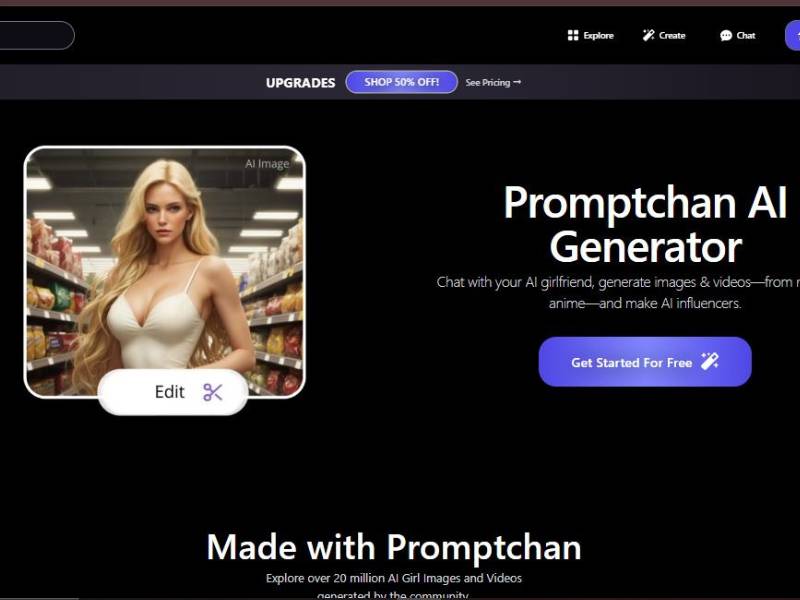
Promptchan is unapologetically prompt-centric. It’s the AI video generator for people who love tweaking language until the output finally clicks. The system rewards specificity, and when you get it right, the results can be impressive.
Core features:
- Highly responsive prompt-to-video system
- Strong image interpretation
- Minimal content restrictions
- Rapid iteration cycles
Use cases:
- Advanced users who enjoy prompt crafting
- Iterative experimentation
- Custom, niche scenarios
I’ll be honest: Promptchan can be frustrating at first. But once you “get” how it thinks, it’s addictive.
5. Seduced AI – Best for Visual Realism

Seduced AI leans hard into realism. As an AI video generator, it prioritizes lifelike motion, lighting, and anatomy. When it works, it’s genuinely impressive.
Core features:
- High-detail image-to-video realism
- Advanced motion interpolation
- Focus on visual fidelity
- Slower but higher-quality renders
Use cases:
- Users seeking realism over speed
- Detailed visual projects
- High-quality personal content
My opinion? It’s not the fastest, but patience pays off here.
6. GirlfriendGPT – Best for Integrated Interaction
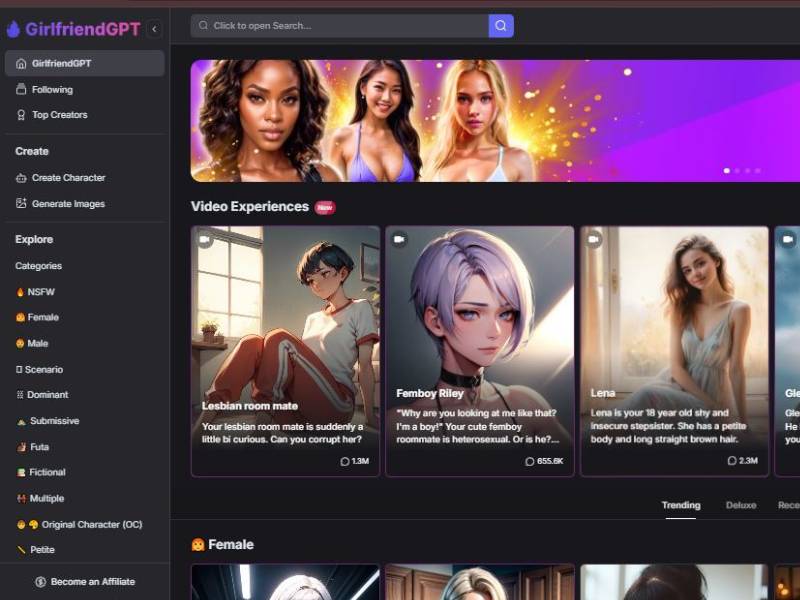
GirlfriendGPT blends conversational AI with video generation. The AI video generator aspect feels like part of a broader experience rather than a standalone tool.
Core features:
- Image-to-video generation tied to chat context
- Personalized character interaction
- Ongoing memory and continuity
- Easy-to-use interface
Use cases:
- Users wanting interactive experiences
- Narrative-driven content
- Companion-style engagement
It’s not the most technical tool, but it’s emotionally engaging.
7. Soulgen – Best for Artistic Flexibility

Soulgen sits between art and utility. It’s an AI video generator that values style and interpretation, sometimes over strict realism.
Core features:
- Artistic image-to-video animation
- Multiple visual styles
- Flexible prompt responses
- Strong image generation foundation
Use cases:
- Artists and designers
- Stylized storytelling
- Creative exploration
I like Soulgen when I want something expressive rather than literal.
8. FreeGF – Best for Budget-Conscious Users
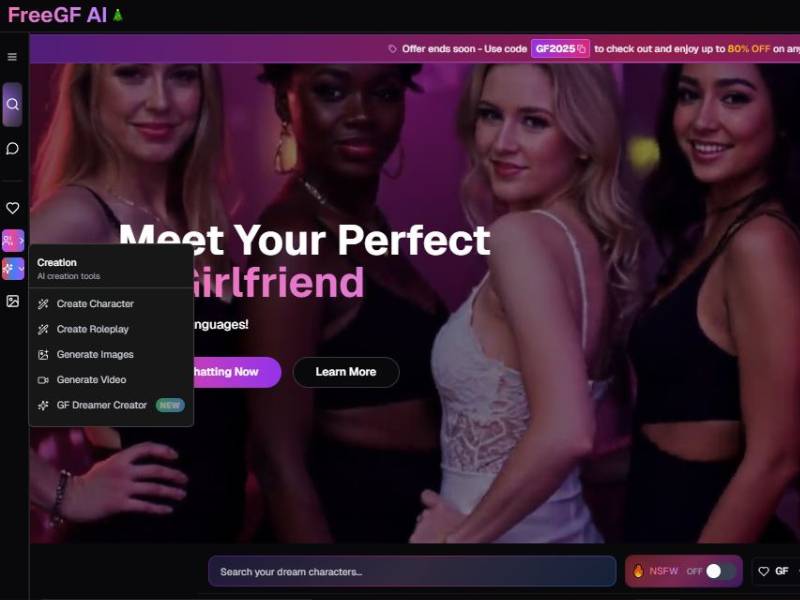
FreeGF is exactly what it sounds like: accessible. As an AI video generator, it lowers the barrier to entry.
Core features:
- Basic image-to-video animation
- Minimal setup
- Free or low-cost access
- Simple interface
Use cases:
- Beginners on a budget
- Casual experimentation
- Users testing the waters
It’s not fancy, but it’s approachable-and that counts.
Final Thoughts and Top 3 Recommendations
After spending time with all of these, patterns emerge. If I had to recommend a top three, it would be Candy AI for overall balance and usability, Seduced AI for realism and visual quality, and Mydreamcompanion for emotional storytelling.
Each excels in a different lane, and that’s the point. There’s no single “best” AI video generator-only the one that fits how you think, create, and feel.
Related Reads:
- Ourdream AI Video Generator
- Unfiltered AI Video Generators with Voice (No Sign up Required)
- 9 AI Girlfriend Chatbots (No Sign Up, No Filter)