AI image generators didn’t make a subtle entrance. They burst through the door, left their dirty boots on your new floor, and asked if you prefer reality, fantasy, or ‘other’.
If you have ever looked at a picture and thought, “This is great, but I wish…” then this article is for you.
I have spent the last few weeks prodding, testing, pushing, breaking, retesting and occasionally giggling at the results — some amazing, others disastrous.
This is not a clinical review — it’s hands on, it’s personal. I actually use these tools. I get frustrated. I get impressed. I care about the UX.
This article is about pure, unadulterated AI image generators that allow you to upload an image and modify it — not write a prompt and hope for the best.
Some of these pure AI image generators are slick. Others are committed enough to build the house, but not stay for the kids.
Each one has its own niche. Let’s get started — opinions, use cases and personality.
Existing Image AI Generators
Text-to-image AI generators are great and all, but there’s something uniquely special about modifying an image you already have. You’re not starting from scratch — you’re already working with something.
You upload a picture, drawing or half-baked concept, and the AI has to keep that integrity — while still doing its thing. That’s not easy.
Here’s where the wheat is separated from the chaff.
An existing-image AI generator has to maintain structure. Lighting. Anatomy. Style.
But most importantly — intent. Are you enhancing? Are you modifying? Are you pushing the limits? Are you fixing something that pisses you off every time you look at it?
The thing that shocked me the most was how emotional modifying an existing image is. You upload something that means something to you — and the results are personal.
When the AI gets it right, there’s a little rush — like being understood without having to repeat yourself.
When the AI gets it wrong, it’s like being rudely interrupted. The best AI image generators know what you want to change, and give you the tools to do it — without inundating you with options.
The worst ones overcorrect, or play it far too safe. And of course — unfiltered AI image generators. They add a whole new dimension — freedom. Sometimes that’s a good thing. Sometimes that’s a bad thing. Sometimes that’s exactly what people are looking for — no judgement here.
Top Tested AI Image Generators from Existing Image (Unfiltered)
The eternal struggle between control and creativity
In AI generated images, every tool promises to give you control and flexibility. Not many deliver on this promise. You need to use the right balance of sliders or the process becomes as exciting as filling out your tax return.
A little too much creativity and the AI starts freelancing for you like an overconfident intern.
With existing image generators, you can literally see the distinction between what has changed and what has not.
Does the AI pay attention to facial proportions? To facial structure? To fashion continuity, or does it ignore the laws of physics every once in a while?
The important tools are the ones that allow you to push, rather than pull. Masking tools, strength sliders, selective regeneration. These are more important than a snazzy landing page.
And usability matters. If I have to watch a tutorial video in order to change a background without removing half of the subject’s face, I’m already frustrated.
The best ones are conversational, even without chat. You do something, see how it looks (in pixels), tweak it, do it again. The cycle should feel friendly, not abusive.
But let’s be clear: unfiltered doesn’t mean irresponsible. Even the best unfiltered tools have a framework.
They know when to enforce reality, and when to embrace fantasy. They allow discovery, without overwhelming every result with visual clutter. It’s a balance that’s hard to find, and when you discover it, you tend to stick with it.
So, who are these tools really for?
Not every AI image generator is meant for everyone, and that’s okay. Some are obviously geared toward artists that want control.
Some are for more relaxed users who want to get things done without having to read through a manual, others for friendship, role playing or some very particular form of creative content.
To say they all do the same thing is like saying a sketchpad and a camera do the same thing. They don’t.
What counts is the alignment. Are you testing? Using for commercial purposes? Do you care? Are you interested in performance? Price? Realism? Emotional response?
All the tools I’m going to introduce now brand themselves as AI image generators, but they have very distinct characters.
Some feel like power tools. Others feel like conversation partners. A few feel like guilty pleasures that quietly do their job very well.
None of that is an accident. The way something is designed is a reflection of the intent behind it and dictates who ultimately benefits.
So, I decided to go with their respective strengths, rather than trying to rate them on a false, universal scale.
Cost, functionality, breadth, personality, personalization, or even just audio quality; everyone has a different preference. So bear that in mind as we get into the specific reviews.
1. Candy AI
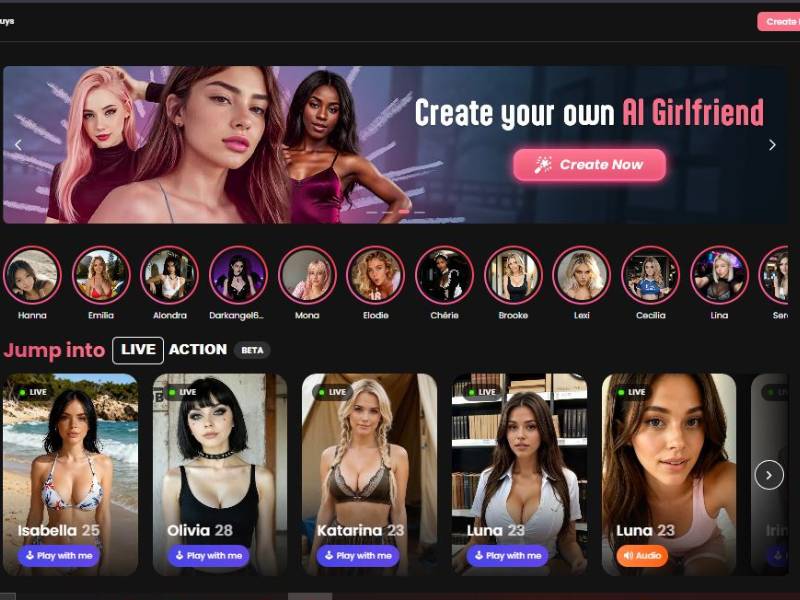
Candy AI positions itself as an AI image generator that prioritizes ease, speed, and emotional engagement over technical complexity, and honestly, it owns that lane pretty well.
This is not a tool for someone who wants to tweak every pixel with surgical precision. It’s for users who want to upload an existing image, describe what they’re aiming for, and get something polished without babysitting the process.
The interface feels friendly, almost disarmingly so, like it’s saying, “Relax, I’ve got this.” And most of the time, it does.
Core features:
- Image-to-image generation with style and realism controls
- Character consistency tools for repeated generations
- Integrated chat and persona-driven interactions
- Fast generation times with minimal setup
- Beginner-friendly UI with guided prompts
Use cases:
- Users who value simplicity over technical depth
- Creators experimenting with character-based visuals
- People who want quick, aesthetically pleasing results
- Beginners testing AI image generators for the first time
My opinion? Candy AI is best for usability and emotional approachability. It feels less like software and more like a creative assistant that doesn’t talk down to you.
Are the results always groundbreaking? No. But they’re reliably good, and that consistency matters.
It’s the kind of tool you’d recommend to a friend who doesn’t want homework with their creativity.
2. Ourdream
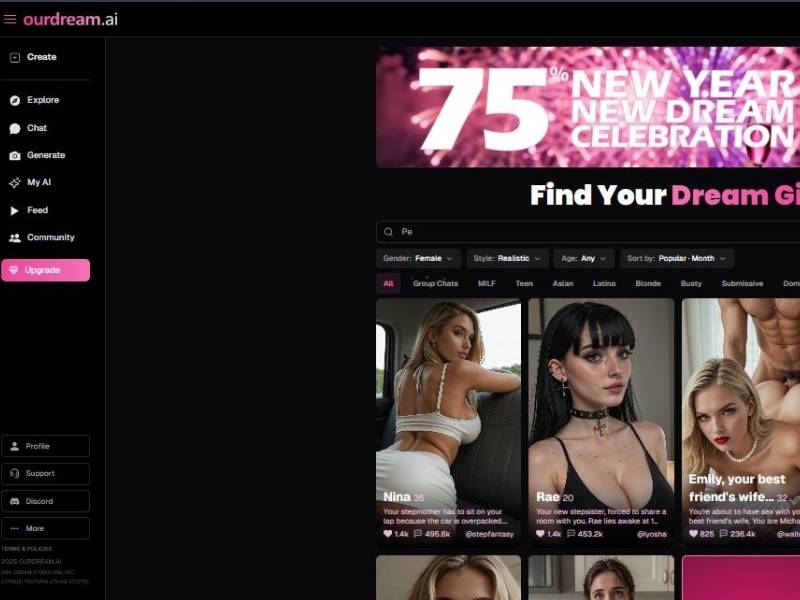
Ourdream is an AI image generator that leans hard into customization and fantasy-driven transformations.
If Candy AI feels like a helpful companion, Ourdream feels like a powerful engine waiting for someone who knows what they want.
It thrives on existing images, especially when users want to push them into stylized, imaginative, or highly specific directions.
This is not a one-click wonder. It rewards experimentation, patience, and a willingness to learn how its controls interact.
Core features:
- Advanced image-to-image transformation controls
- Style fusion and fantasy-oriented rendering
- Strong prompt interpretation with visual memory
- Adjustable influence strength for original images
- Community-driven presets and inspiration
Use cases:
- Artists exploring fantasy or stylized visuals
- Users who enjoy experimenting with settings
- Projects requiring dramatic visual reinterpretation
- People who don’t mind a learning curve
My take is that Ourdream is best for creative depth. It doesn’t rush you, and it doesn’t oversimplify.
Sometimes it overshoots, sure, but that’s part of the charm. When it works, it really works.
This is the tool for users who like getting their hands dirty and don’t panic when the first result isn’t perfect.
3. Mydreamcompanion
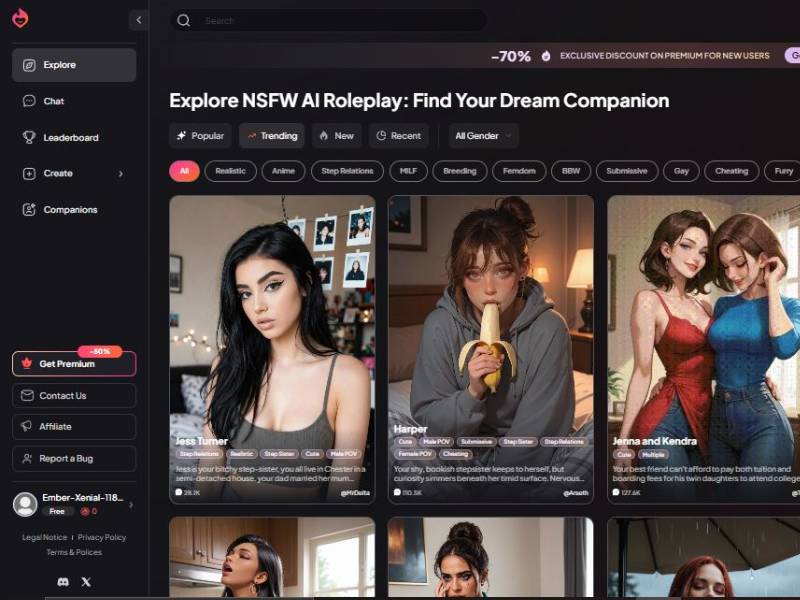
Mydreamcompanion sits at an interesting intersection between AI image generator and emotional experience.
It’s clearly designed for users who care about continuity-faces, moods, vibes-and want their existing images to evolve rather than reset every time.
There’s a softness to how it handles transformations, like it’s trying not to break the emotional thread of what you uploaded.
Core features:
- Image-to-image refinement with identity preservation
- Emotionally consistent rendering styles
- Integrated companion and narrative elements
- Gentle transformation scaling
- Focus on realism and familiarity
Use cases:
- Users invested in character continuity
- Long-term creative or personal projects
- People who value emotional tone over spectacle
- Those who want subtle, believable changes
I’d say Mydreamcompanion is best for emotional continuity. It doesn’t chase shock value.
It’s thoughtful, sometimes almost cautious, but that restraint is exactly why some people love it. It feels considerate, and that’s rare in this space.
4. GirlfriendGPT
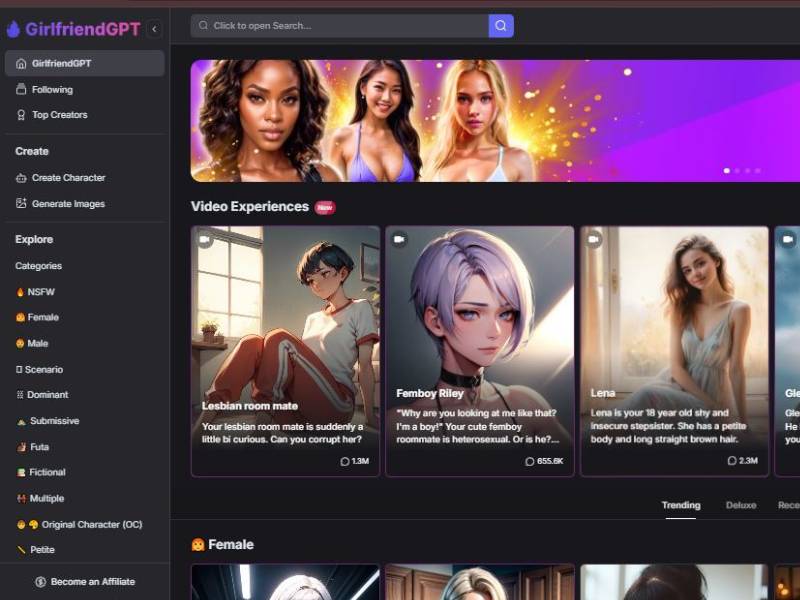
GirlfriendGPT approaches the AI image generator concept from a conversational-first mindset. The image generation is deeply tied to interaction, context, and ongoing dialogue.
Uploading an existing image here doesn’t feel like a standalone action-it feels like part of a relationship loop. That’s either exactly what you want or very much not.
Core features:
- Conversational image generation context
- Image refinement based on chat history
- Character-driven visual outputs
- Personalization over time
- Scenario-based image evolution
Use cases:
- Users who enjoy narrative and interaction
- People looking for personalized visuals
- Roleplay and scenario-driven content
- Those who value context over raw control
In my opinion, GirlfriendGPT is best for interactive storytelling. The images feel like responses, not outputs. It’s not the most technically flexible tool, but emotionally? It knows its audience.
5. Soulgen

Soulgen is often described as a powerhouse AI image generator, and that reputation isn’t accidental.
It handles existing images with confidence, especially when realism and anatomical accuracy matter. It’s less playful than some others, more results-driven.
Core features:
- High-fidelity image-to-image rendering
- Strong realism and anatomy handling
- Style and detail sliders
- Prompt and image blending
- Reliable consistency
Use cases:
- Users prioritizing image quality
- Realistic character transformations
- Professional or semi-professional projects
- People who want predictable results
Soulgen is best for quality and reliability. It’s not trying to charm you. It’s trying to deliver, and it usually does.
6. Promptchan
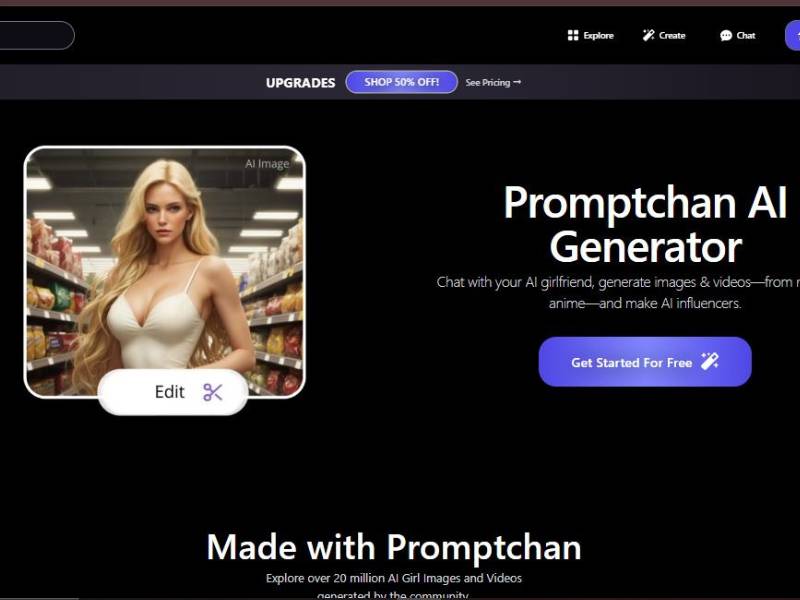
Promptchan feels like a sandbox built by and for prompt nerds. As an AI image generator, it thrives when users enjoy tweaking language as much as visuals. Existing images are treated as foundations, not boundaries.
Core features:
- Prompt-heavy image-to-image workflows
- Style experimentation tools
- Community prompt sharing
- Rapid iteration cycles
- Flexible output variations
Use cases:
- Prompt engineers and tinkerers
- Experimental creators
- Users who enjoy trial-and-error
- Learning how prompts affect visuals
Best for experimentation, hands down. Promptchan rewards curiosity and patience, and it doesn’t pretend otherwise.
7. FreeGF
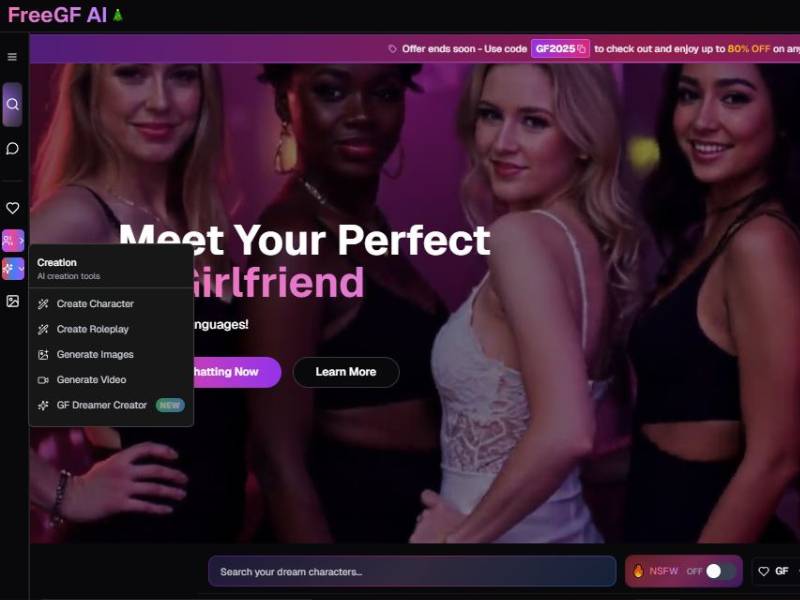
FreeGF markets itself around accessibility, and as an AI image generator, it lowers the barrier to entry significantly. Existing-image tools are simple, sometimes rough, but functional.
Core features:
- Basic image-to-image generation
- Minimal setup
- Free or low-cost access
- Quick results
- Lightweight interface
Use cases:
- Budget-conscious users
- Casual experimentation
- First-time AI image generator users
- Low-stakes creative play
FreeGF is best for price. It’s not fancy, but it’s available, and that matters more than people admit.
8. Seduced AI

Seduced AI is unapologetically niche and focused. It treats existing images as starting points for stylized, bold transformations with a clear aesthetic goal.
Core features:
- Style-forward image transformations
- Strong thematic consistency
- Image influence controls
- Fast generation
- Clear visual direction
Use cases:
- Users seeking a specific aesthetic
- Bold, stylized image projects
- People who know what they want
- Short creative bursts
Best for visual style and confidence. It knows its lane and stays in it.
Conclusion: The Top 3 Based on Real Use
After testing all of these as AI image generators using existing images, three stand out for different reasons.
Candy AI wins for usability and approachability-it’s the easiest to recommend. Soulgen takes the crown for pure image quality and reliability.
Ourdream earns its spot for creative depth and flexibility. The “best” tool depends on what you value, but those three cover the widest range of real user needs.
If you know what you’re after, one of them will feel like it was built for you-and that’s the whole point.